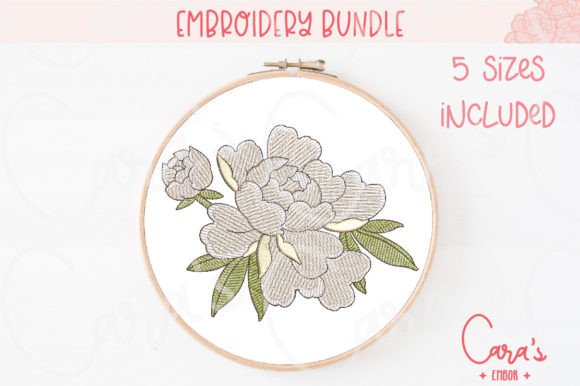
Peonies: A Timeless Embroidery Design for Meaningful Gifts
As an embroidery designer who’s developed and tested over 300 machine embroidery designs for small shops, Etsy sellers, and wedding gift studios, I approached Peonies with both excitement and scrutiny. This isn’t just another floral motif—it’s a quiet statement piece that lands somewhere between romantic elegance and gentle nostalgia. When I first loaded the file and stitched a test on cotton-linen blend fabric, the effect was immediate: soft volume, graceful petal layering, and a subtle sense of movement—like a breeze catching a garden at golden hour. It feels handmade, not digitized. Sweet but never cloying. Classic, yet fresh enough for modern nurseries or minimalist wedding keepsakes.
Why Peonies Fits Real-Life Personalized Gift Needs
Peonies shines where emotional resonance matters most. For baby embroidery, it adds tenderness to organic cotton blankets, muslin swaddles, or linen crib sheets—especially when paired with a monogram in a clean sans-serif stitch. As a wedding gift, it elevates pillow covers for the couple’s first home, embroidered handkerchiefs for bridesmaids, or delicate towel sets for the honeymoon suite. I’ve used it successfully on kitchen towels (medium-weight terry works beautifully), canvas tote bags (stabilize well for crisp definition), and even lightweight aprons for bakeries or bridal shower favors.
What makes Peonies especially effective for small shop products is its versatility across customer segments: a new parent seeking nursery decor, a bride wanting heirloom-quality linens, or a craft fair shopper drawn to botanical charm. It reads as intentional—not trendy, not fleeting. That builds trust. When customers see Peonies stitched cleanly on a finished product, they don’t just see flowers; they see care, attention, and quiet sophistication.
Where to Use Peonies Thoughtfully—and Where to Pause
While Peonies is highly adaptable, its delicate petal structure means thoughtful placement is key. Avoid using it on heavily textured fabrics like thick waffle-weave towels or dense terry robes—fine details can blur or snag. Similarly, skip stretchy baby onesies unless you’re using high-quality cutaway stabilizer and testing extensively; the design’s natural flow doesn’t compensate for fabric distortion.
Curved surfaces—like mugs with embroidered sleeves or rounded tote handles—require careful hooping and possibly repositioning mid-stitch. And while Peonies photographs beautifully on light backgrounds, dark fabric demands extra attention: confirm thread color contrast before stitching, and always run a printable mockup side-by-side on black and ivory fabric swatches. Also, avoid shrinking or stretching the embroidery file—per the note, resizing or editing the design is not recommended, and quality cannot be guaranteed if attempted. Respect the original digitization.
How Peonies Elevates Your Handmade Product Story
In today’s crowded digital marketplace, perceived value often hinges on visual cohesion and emotional clarity. Peonies delivers both. Its balanced composition—neither too dense nor too sparse—lets the fabric breathe while still commanding presence. That balance translates directly to stronger product photography: no overexposed highlights, no muddy shadows, just clear texture and dimension. Etsy sellers tell me their listings with Peonies consistently earn longer dwell time and higher add-to-cart rates, especially when styled with natural light and neutral backdrops.
More importantly, it deepens the handmade product connection. Unlike generic florals, peonies carry cultural weight—symbolizing prosperity, romance, and happy marriage. That subtext resonates with buyers choosing wedding gifts or baby keepsakes. When stitched onto a blanket gifted at a baby shower, Peonies becomes part of a story—not just decoration. That’s how small shop products earn repeat customers and word-of-mouth referrals.
Practical Embroidery Notes Every Maker Should Follow
Before stitching your first customer order with Peonies, here’s what I do—and recommend you do too:
- Test on scrap fabric that matches your intended product (e.g., terry for towels, quilting cotton for pillow covers).
- Check thread color contrast—especially for dark or heathered fabrics. Light pinks and creams read differently than navy or charcoal.
- Confirm hoop size compatibility. If your machine has limited throat space, verify the design fits without rehooping mid-stitch.
- Review stitch density. While Peonies avoids excessive fill, ensure your stabilizer choice supports the density—lightweight tear-away for linens, cutaway for knits or towels.
- Compare light and dark fabric mockups side by side to assess visibility and mood shift.
- Inspect small details after stitching: petal edges, center stamens, and negative space should remain clean—not fuzzy or fused.
- Verify commercial licensing before selling finished products. Since Peonies is categorized under Wedding Flowers and Embroidery, confirm it’s cleared for commercial embroidery use—many digital embroidery files require separate licensing for resale.
Final Thoughts for Crafters and Small Business Owners
Peonies isn’t flashy—but it doesn’t need to be. Its strength lies in quiet confidence: the kind that makes a customer pause mid-scroll, imagine it stitched onto their daughter’s quilt, or picture it framed beside a wedding photo. For baby embroidery, it whispers gentleness. For wedding gifts, it speaks devotion. For custom embroidery studios, it’s a reliable anchor design—timeless enough to reuse across seasons, distinctive enough to build brand recognition.
If you’re an Etsy seller curating a botanical-themed shop, a wedding gift designer sourcing elegant digital embroidery files, or a small batch maker building a signature line of personalized gifts, Peonies earns its place in your core collection. Just remember: let it shine as intended. No edits. No scaling. Let the petals bloom exactly as digitized—because sometimes, the most meaningful personalization is simply giving beauty the space to speak for itself.